

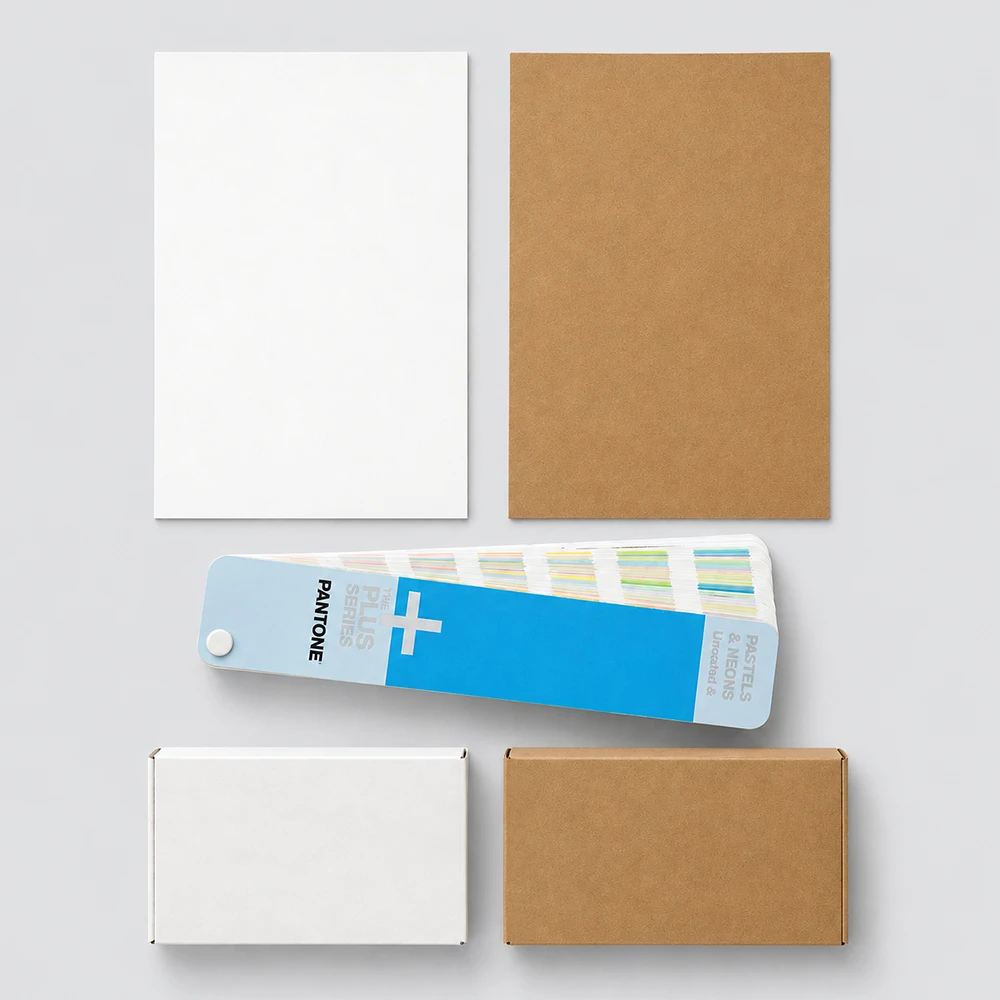
White paperboard and kraft board can both be used for paper packaging, but they create noticeably different results. The better choice depends on the appearance, printing requirements, surface character and structure you want from the finished package.
Understanding these practical differences makes the material decision easier.
[Featured Image]
- Start With the Appearance You Want
White paperboard provides a clean, neutral surface. It is commonly chosen when packaging needs bright colours, detailed graphics or a more controlled visual presentation.
Kraft board has a naturally brown appearance and more visible material character. The board itself becomes part of the packaging design, making it suitable when a natural or understated look is preferred.
The choice should therefore begin with the intended visual direction rather than with material name alone. - Consider How the Artwork Will Print
A white surface provides a relatively neutral base for printed colours. This generally makes it easier to reproduce artwork where colour appearance and contrast are important.
Kraft board changes the visual starting point. Its brown base can influence printed colours, particularly lighter shades. Some designs work well with this effect, while others may require adjustments or additional printing considerations.
If colour accuracy is important, reviewing a physical printed sample is more reliable than judging the result only from a screen. - Think About Surface Feel and Product Presentation
Material also affects how the package feels in the hand.
White paperboard usually creates a cleaner and more uniform presentation. Kraft board tends to show more natural variation and visible paper character.
Neither appearance is automatically better. A cosmetics carton, retail accessory package and simple handmade-product box may each call for a different visual and tactile result.
The material should support the way the product is intended to be presented. - Evaluate Material and Structure Together
Paperboard should not be selected only by colour.
The box dimensions, product weight, carton structure, creasing and required stiffness also influence the final material specification. Two cartons with a similar appearance may require different board specifications because they perform different functions.
For this reason, material selection is best reviewed together with the actual packaging structure and a physical sample where necessary.
White paperboard is often the practical starting point for clean graphics and controlled colour reproduction. Kraft board is useful when its natural colour and surface character are part of the intended design. The right choice is the one that works with both the artwork and the finished carton.