FYpackaging

  • How to Compare Packaging Samples Before Approving Production?

    How to Compare Packaging Samples Before Approving Production?

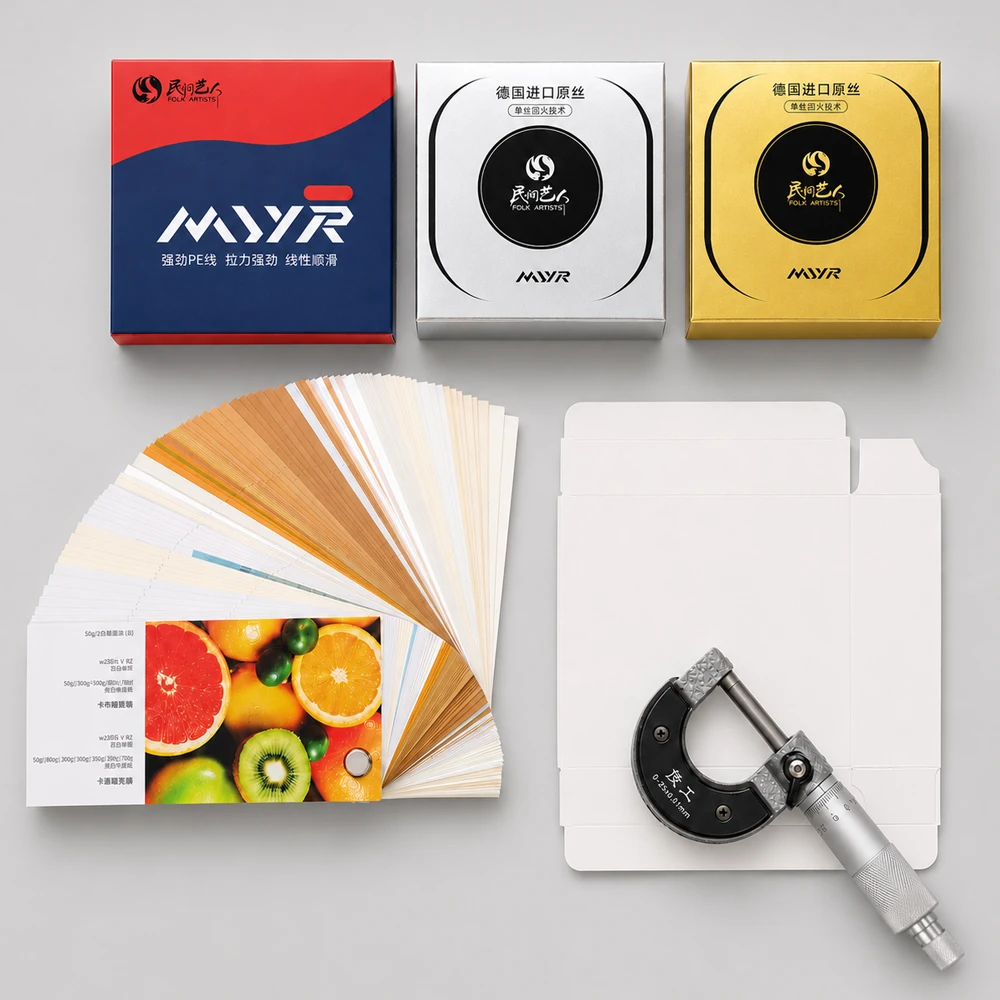
    A packaging sample gives buyers a chance to see how a proposed design works beyond a drawing or screen preview. It can reveal issues with dimensions, assembly, product fit, print appearance and handling before a larger order moves forward.

    However, a sample review is only useful when it is carried out against a clear specification. Looking at a sample and saying that it “looks fine” may leave important details unresolved. A more reliable approach is to check the sample systematically and record what has been approved and what still needs attention.

    Confirm that you are reviewing the correct sample

    Before inspecting the packaging itself, confirm what the sample represents. Check the project name, product, size, structure, material, artwork version and any special finishing requirements.

    If several versions have been produced, label them clearly. A sample made from an earlier dieline or artwork file should not be mistaken for the current version.

    It is also useful to distinguish between different sample types. A structural sample may be intended to check dimensions and assembly, while a printed sample may be used to assess artwork and appearance. A sample produced with substitute materials may not represent the final material or finish exactly.

    Ask the supplier to identify any differences between the sample and the intended production specification. This prevents assumptions from becoming part of the approval record.

    Check dimensions and product fit

    Measure the key dimensions and compare them with the approved specification. Confirm whether the stated measurements are internal or external, particularly where the available space inside the package is important.

    Then place the actual product, or a dimensionally accurate equivalent, inside the sample. Check whether it can be inserted and removed without unnecessary force and whether it sits in the intended position.

    For a package containing several products or accessories, review the complete arrangement. Check the position of each item, the space between components and whether any part can move or rub against another.

    Do not rely on the appearance of an empty sample. A box can look correctly proportioned but still be too tight, too loose or awkward to pack once the product is added.

    Test the structure and assembly

    Open and close the sample several times. Check the folds, locking points, lid, base, tabs, handles or other functional parts relevant to the design.

    For folding cartons, pay attention to the crease lines, panel alignment, closure and the way the carton holds its shape. For gift boxes, review the lid fit, opening experience and any insert. For paper bags, check the base, gussets and handle attachment as well as the way the bag stands and carries the intended contents.

    If the package will be assembled by a packing team, ask someone to follow the expected packing process. A structure that is difficult to assemble or close may create practical problems even if it looks attractive when finished.

    The review should reflect the real use of the package, not just a quick inspection on a desk.

    Assess the material and surface finish

    Check whether the sample uses the specified material or a substitute. If the material is different, note that the sample may not be suitable for final approval of material appearance or performance.

    Look at the surface, stiffness, texture and overall feel. Compare the material with the approved specification and any reference sample. Where the project includes lamination, varnish, foil, embossing, debossing or other finishes, check that the result matches the intended design.

    Lighting can affect how colours and finishes appear. Review the sample under reasonable viewing conditions and consider the environment in which the package will normally be displayed or used.

    If colour matching is important, use the agreed colour references and proofing process. A photograph or screen image should not be treated as a definitive colour standard.

    Review the printed artwork carefully

    Check the sample against the latest approved artwork. Confirm the product name, logo, text, symbols, barcodes, language versions and other important details.

    Pay particular attention to:

    • Spelling and punctuation
    • Text size and legibility
    • Alignment and panel positioning
    • Colour direction and consistency
    • Image quality and fine details
    • Cutting and folding positions
    • Any information close to an edge or crease

    For multiple designs or product variants, verify that the correct artwork appears on each sample. A version-control error can be just as serious as a printing issue.

    Where the package carries regulated product information, the responsible brand or compliance contact should confirm that the wording and layout are correct. A packaging sample review is not a substitute for that approval.

    Review the sample in its real context

    The sample should be assessed as the customer, warehouse or packing team will encounter it.

    Pack the actual product. Lift the package, carry it if relevant, open and close it, and check how it is displayed or stored. For a gift box, review the opening experience and the arrangement of the contents. For a paper bag, consider how it feels when loaded with the intended items. For an e-commerce carton, assess the complete arrangement with any inserts and outer shipping packaging.

    If the package has a specific protection requirement, determine whether additional testing is appropriate. A visual inspection or a single sample does not establish that every production unit will perform identically under all handling conditions.

    Compare samples using the same criteria

    When comparing two or more options, use the same checklist for each sample. Otherwise, one design may receive more attention simply because it is reviewed first or looks more impressive.

    A simple comparison record can include:

    • Sample reference and date received
    • Specification and artwork version
    • Dimensions and product fit
    • Structure and assembly
    • Material and finishing
    • Print and colour observations
    • Functional or handling concerns
    • Required changes
    • Approval status and responsible person

    Separate critical requirements from preferences. A spelling error, incorrect size or unsuitable fit should be resolved before production. A minor visual preference may be discussed separately, depending on the project brief.

    Record changes before approving the final version

    If changes are needed, describe them clearly and refer to the relevant panel, dimension, artwork file or sample reference. Avoid vague comments such as “make it stronger” or “adjust the colour” without explaining what needs to change.

    The supplier should then confirm how the requested changes will be reflected in the next version. When a revised sample or proof is provided, check that the previous issues have been addressed and that no new changes have been introduced unintentionally.

    Approval should identify the exact version being accepted. Keep the final specification, artwork and approval record together so that both sides can refer to the same reference.

    Remember what sample approval does — and does not — confirm

    A sample review helps confirm that the proposed packaging matches the agreed design and practical requirements. It does not automatically guarantee that every production unit will be identical or that the package is suitable for every possible use.

    The scope of approval should be clear. If the sample was made with substitute material, if certain finishes were not included, or if testing remains outstanding, record those limitations rather than treating the sample as full approval.

    Make sample review part of the buying process

    A useful sample review combines measurement, product fit, structural checks, material and print assessment, practical handling and clear version control. The more specific the review, the easier it is to resolve issues before production begins.

    If you are preparing to review a custom packaging sample, share the packaging format, product details and points you need to verify with FYpackaging. A clear review brief helps keep the discussion focused on the finished specification.

  • What Should Buyers Consider When Choosing Food Packaging?

    What Should Buyers Consider When Choosing Food Packaging?

    Choosing packaging for a food product involves more than selecting a box, bag or label that looks right. The packaging has to suit the food, the way it will be packed and stored, and the market where the product will be sold.

    A material that works for one food application may not be suitable for another. Temperature, contact time, moisture, oil content and the intended use can all affect the requirements. Buyers should define these conditions before asking suppliers to recommend a packaging format.

    Start with the food product and its intended use

    Describe the food as clearly as possible. Is it dry, oily, acidic, frozen, chilled or ready to eat? Will it be sold as a single item, a multipack or part of a gift set?

    These details help establish what the packaging needs to do. A carton used as an outer sleeve may have a different role from a pouch or container that directly holds the food.

    Also consider the product’s expected shelf life and storage conditions. Packaging for a product kept at room temperature may face different requirements from packaging used in chilled or frozen distribution.

    Avoid using broad descriptions such as “food packaging” as the complete brief. The more clearly the product and use are described, the easier it is to identify the relevant material and performance questions.

    Confirm whether the packaging is in direct food contact

    One of the most important distinctions is whether a packaging component touches the food directly.

    A printed paperboard carton around a sealed inner pouch may not have the same function as a paper wrapper that directly contacts the product. A window, coating, adhesive, ink or other component may also need to be considered depending on its position and the possibility of contact or transfer.

    Map the full packaging arrangement. Identify the primary food-contact layer, secondary packaging and outer transport packaging. If the package contains several materials or components, list them rather than describing the whole item with one material name.

    This information is important when checking which food-contact rules and supporting evidence apply.

    Define temperature, time and storage conditions

    Food-contact suitability is linked to the conditions in which a material is used. Buyers should explain whether the package will be used for hot filling, refrigerated storage, freezing, reheating or other specific conditions.

    The expected contact time also matters. A material intended for brief contact may not be suitable for a different use involving longer storage or a different temperature.

    Provide the supplier with the actual use conditions rather than asking only whether a material is “food safe.” The responsible compliance team should assess the material against the relevant requirements for the intended application and destination market.

    Choose a packaging format that fits the product

    The format should support the product’s handling, storage, display and distribution needs. Depending on the application, buyers may be considering folding cartons, paper bags, sleeves, labels, wraps, pouches or a combination of components.

    For paperboard packaging, consider whether the carton is an outer pack, a divider or a direct-contact component. If the product is sold in a container, the carton may need to hold the container securely and provide space for product information.

    For bags and wraps, consider how the product is inserted, carried, sealed or presented. If the food is oily or moist, the intended contact surface and any required barrier properties need to be assessed rather than assumed from the appearance of the paper.

    Consider moisture, grease and other barrier needs

    Some food products create specific packaging challenges. Moisture, oil, aroma, oxygen and light may affect product quality or the suitability of a packaging arrangement.

    Not every package needs every type of barrier. The relevant requirement depends on the food, its shelf life, storage conditions and the packaging system.

    If a barrier coating, film or laminate is being considered, ask what function it is intended to provide and whether it is suitable for the intended food-contact use. Also consider how additional layers may affect recyclability and the packaging’s end-of-life treatment in the destination market.

    Do not treat a material’s visual appearance or general description as proof of barrier performance. Request the appropriate technical information and review it with the responsible product or compliance team.

    Check printing, inks, adhesives and finishes

    Food packaging may include printed graphics, labels, adhesives, coatings and decorative finishes. Their position and intended use can matter, particularly where direct or indirect contact is possible.

    Tell the supplier whether printing is on the outside or inside, whether the package has a window, and whether any label or adhesive is close to the food-contact area. If the design includes special finishes or multiple material layers, include them in the packaging specification.

    Artwork approval should also include the required product information and any mandatory wording. The brand owner or responsible compliance contact should confirm the accuracy and legal suitability of that information for each market and language.

    Confirm the destination market and supporting documentation

    Food-contact rules are not identical in every market. A package intended for sale in the EU may need to be assessed against different requirements from one intended for another country.

    Before production, identify the countries where the product will be placed on the market and who is responsible for confirming compliance. Ask which declarations, test reports, material specifications or other records are required for the particular application.

    A supplier may be able to provide material information or documents from upstream manufacturers. However, a general statement from a supplier does not automatically establish that the complete finished packaging complies with every rule in every market.

    For EU-bound food-contact packaging, buyers should also be aware that the PPWR introduces restrictions on PFAS in food-contact packaging from 12 August 2026. The applicable provisions and thresholds should be checked against Regulation (EU) 2025/40 and current official guidance. This is one reason to make the intended use and destination market clear from the beginning.

    Review a sample and the complete packaging arrangement

    A sample can help assess dimensions, structure, opening, sealing, appearance and handling. It should be reviewed with the actual product or a representative sample wherever practical.

    Check that the package is easy to fill, close, store and display. If the packaging includes an inner bag, liner, tray or label, assess the complete arrangement rather than reviewing each component in isolation.

    A visual sample review does not replace food-contact compliance assessment or technical testing. Those checks should be determined by the product, material, use conditions and applicable rules.

    Prepare a clear brief before requesting a quotation

    A useful food-packaging brief should include:

    • The type and characteristics of the food
    • Whether each packaging component has direct food contact
    • Expected contact time and temperature
    • Storage and distribution conditions
    • Required packaging format and dimensions
    • Any moisture, grease, aroma or other barrier needs
    • Destination markets and languages
    • Artwork status and required product information
    • Expected order quantity and delivery requirements

    If some details are not yet known, mark them as undecided. It is better to identify an open compliance question than to let a supplier make an assumption.

    Make food-contact requirements part of the first discussion

    Food packaging should be specified around the product and its actual conditions of use. Confirm contact status, temperature, time, storage, destination market and the role of every packaging component before finalising the material and artwork.

    If you are sourcing packaging for a food product, share the food type, intended contact conditions, packaging format and destination market with FYpackaging. This helps define the information that should be reviewed before the specification is finalised.

  • How to Choose Protective Packaging for E-commerce Shipping?

    How to Choose Protective Packaging for E-commerce Shipping?

    When a product is sold online, its packaging has to work through more than one stage. It may be stored, picked, packed, sorted, transported and handled several times before it reaches the customer. A package that looks suitable on a shelf is not automatically ready for that journey.

    Choosing protective packaging for e-commerce starts with understanding the product and the route it will travel. The aim is not simply to add more material. It is to create a practical packaging arrangement that limits unnecessary movement, suits the product’s needs and can be packed consistently.

    Start with the product, not the shipping carton

    Record the product’s dimensions, weight, shape and any parts that are particularly vulnerable. A glass container, an electronic accessory, a soft textile item and a multi-piece product set will not need the same packaging approach.

    Look beyond the main body of the product. Caps, pumps, handles, protruding parts and accessories can affect the space required. If the order may contain several items, consider how they will sit together and whether they could rub against or press on one another.

    It is also useful to understand what protection the product already has. A product supplied in a rigid retail box may need a different outer arrangement from one packed in a thin pouch. The shipping solution should be assessed as a complete system rather than by looking at one component in isolation.

    Separate product packaging from transit packaging

    Many e-commerce orders use more than one packaging layer. The immediate product packaging may present the brand, hold components together or provide basic protection. An outer shipping carton or mailer may then be used for the delivery network.

    Decide what each layer is expected to do. If the retail box is part of the customer experience, it may need to arrive with its appearance intact. If the product is shipped in a mailer without a separate carton, the mailer itself may need to provide the required level of containment and protection.

    Avoid assuming that a decorative box is suitable as a shipping container. Equally, avoid adding a large outer carton by default when a more suitable, compact arrangement may be possible. The right choice depends on the product, the distribution route and the handling conditions.

    Control movement inside the package

    Movement is one of the practical issues to examine when developing protective packaging. If a product can slide freely, it may strike the inside walls or collide with other items. If it is held too tightly, packing may become difficult or pressure may be transferred to a vulnerable part.

    Consider how the product will be positioned. Depending on the design, this may involve a fitted insert, divider, shaped support, cushioning material or a carefully sized inner carton. The choice should reflect the product’s shape and the way it is packed.

    For multi-item orders, think about separation as well as cushioning. Two products that are individually robust may still scratch or damage one another if they move together during transport.

    There is no universal clearance or cushioning specification that suits every product. Use actual product dimensions and, where possible, a physical sample to assess the fit.

    Choose the outer format around the delivery process

    The outer packaging should suit the product and the fulfilment operation. A carton, mailer or other format may be appropriate depending on size, weight, fragility, packing method and carrier requirements.

    Check the usable internal dimensions rather than relying only on the outside measurements. The package needs enough room for the product and any internal support, but excessive empty space can make the packed order less efficient and may allow unnecessary movement.

    Also consider how the parcel will be sealed, labelled, stacked and handled. If the package is awkward to assemble or close, that can create problems in a busy packing operation. A design that works in a single sample may need further review if the same process will be repeated across many orders.

    Balance protection, presentation and material use

    E-commerce packaging has several jobs, and they can compete. More cushioning may help address a particular risk but increase package size or packing time. A highly printed retail box may support brand presentation but still need a separate transit layer.

    The goal is to identify the protection that is actually needed. Avoid specifying extra layers simply because they seem safer. Instead, look at the product’s vulnerabilities, the likely handling route and the condition in which the customer expects to receive it.

    Where sustainability or material reduction is part of the brief, assess it alongside product protection. Reducing packaging is useful only when the resulting arrangement remains appropriate for the product and distribution conditions.

    Review a complete sample, packed as it will be shipped

    An empty box tells you very little about how a finished order will behave. Review a sample using the actual product, or a dimensionally accurate equivalent, together with the intended inserts and outer packaging.

    Check whether:

    • The product fits without being forced into position
    • Internal supports hold the product as intended
    • Components are separated where necessary
    • The package can be closed and sealed properly
    • The packed order is practical for the fulfilment team
    • The outside dimensions suit the intended shipping process
    • The product and its retail packaging remain presentable after handling checks

    If the product has specific fragility or distribution risks, determine whether a suitable transport or packaging test is needed. Test methods and acceptance criteria should be selected for the product and route; a generic test result should not be treated as a guarantee for every shipment.

    Give your packaging supplier the right information

    A useful brief should include product dimensions and weight, product photographs or samples where available, fragile areas, the current retail packaging, the expected order configuration and the delivery route. Explain whether the package will be shipped alone or inside another carton.

    If you have a target outer size, packing method or presentation requirement, include it. If these details are not final, identify them as open questions so they can be considered during sampling.

    Choose the whole shipping arrangement, not just a box

    Protective e-commerce packaging works when the product, internal support, outer format and packing process are considered together. Start with the product’s real requirements, review how it will move through delivery, and assess a complete packed sample before settling the specification.

    If you are reviewing protective packaging for an e-commerce product, share its dimensions, weight, fragility and delivery route with FYpackaging. These details provide a useful starting point for discussing packaging options.

  • Understanding the EU PPWR: What Packaging Buyers Need to Know in 2026

    Understanding the EU PPWR: What Packaging Buyers Need to Know in 2026

    The European Union’s Packaging and Packaging Waste Regulation (PPWR) is one of the most significant changes to packaging rules in recent years. It affects how packaging is designed, placed on the market, labelled, reused and managed as waste.

    For businesses buying packaging, the practical question is not simply whether a box, bag or label is made from paper or plastic. It is whether the packaging, the product it contains and the supply chain behind it meet the requirements that apply in the destination market.

    The regulation is now moving from preparation into implementation. This guide explains the main points buyers should understand in 2026 and how to start a sensible review with suppliers.

    What is the PPWR?

    The PPWR is Regulation (EU) 2025/40 on packaging and packaging waste. It replaces the previous EU Packaging and Packaging Waste Directive with a regulation designed to establish a more harmonised framework across the EU.

    It covers packaging and packaging waste across materials and uses, rather than focusing on one packaging format. This means that paperboard cartons, paper bags, plastic packaging, labels and other packaging components may all be relevant, depending on their function and the specific provisions involved.

    The regulation entered into force on 11 February 2025 and began to apply on 12 August 2026. However, this does not mean that every requirement becomes applicable on that date. Many obligations have their own later dates, transition arrangements or depend on further EU measures.

    The legal text is Regulation (EU) 2025/40. The European Commission has also published implementation guidance and FAQs to help explain selected provisions. Those materials are useful for understanding the Commission’s interpretation, but they do not replace or amend the regulation itself.

    Which businesses and packaging are affected?

    The PPWR is relevant to economic operators involved in packaging and packaged products placed on the EU market. Depending on the activity, this can include manufacturers, importers, distributors, suppliers of packaging and companies that pack or sell products.

    The exact legal role matters. A business that manufactures empty packaging, a company that imports packaging into the EU, and a brand owner that places packaged goods on the market may have different obligations. The role should be assessed against the regulation’s definitions and the actual commercial arrangement, not assumed from the name used on a purchase order.

    The regulation’s scope is broad. It is not limited to plastic packaging or consumer-facing retail boxes. Packaging used for transport, grouped packaging and e-commerce packaging can also be relevant. Certain requirements apply differently according to packaging type, material, use and operator role.

    For buyers outside the EU, the practical starting point is to ask the EU-based importer, brand owner or responsible compliance contact which obligations apply to the specific packaging and who is responsible for demonstrating conformity.

    What are the main areas of change?

    The PPWR brings together several connected areas. Buyers should understand the direction of travel, even where a particular requirement will apply later.

    1. Substances of concern and packaging safety

    The regulation introduces restrictions concerning substances in packaging. Among the provisions that began applying from 12 August 2026 are limits concerning certain heavy metals in packaging and restrictions on PFAS in food-contact packaging.

    The PFAS provisions are particularly relevant where packaging is intended to come into contact with food. Buyers should not assume that a general statement such as “food grade” or a material description is enough to establish compliance. The intended food-contact conditions, material composition and supporting evidence need to be considered.

    The exact requirements and applicable thresholds are set out in the regulation. Businesses should confirm the relevant test information or declarations with the responsible material and packaging suppliers, and have the evidence reviewed by the party responsible for compliance.

    2. Recyclability and packaging design

    The PPWR sets a framework intended to improve packaging recyclability. Further criteria and implementing measures are being developed, with key design-for-recycling requirements scheduled for later phases.

    For packaging buyers, this means design decisions should be considered early. Material combinations, coatings, laminations, adhesives, windows, closures and other components may affect how a package is handled in existing recycling systems.

    A package should not be described as recyclable simply because its main body is paper or another commonly recycled material. The complete packaging design and the rules applicable at the relevant time need to be considered.

    3. Recycled content in plastic packaging

    The regulation introduces minimum recycled-content targets for certain plastic packaging, with targets applying from 2030 and varying by packaging category.

    This is not a general recycled-content requirement for every paperboard carton or paper bag. Buyers should identify the material and packaging category before applying a target. The Commission is also developing methodologies and criteria for calculating and verifying recycled content.

    Where recycled content is relevant, request clear information about the material, the calculation basis and the supporting documentation rather than relying on a broad marketing statement.

    4. Packaging minimisation and empty space

    The PPWR addresses unnecessary packaging and excessive empty space. For grouped, transport and e-commerce packaging, the regulation sets a maximum empty-space ratio of 50%. The deadline is 1 January 2030 or three years after the relevant implementing act establishing the calculation methodology enters into force, whichever is later.

    This is an important issue for e-commerce and logistics packaging, but it should not be simplified into a rule that every package must be exactly half full today. The methodology is to be established through a later implementing act, and the regulation recognises that some products and shipping arrangements need space for protection or other practical reasons.

    Buyers can still take useful steps now: confirm internal dimensions, review unnecessary layers, and assess whether the package is sized appropriately for the product and its distribution route.

    5. Reuse, restrictions and labelling

    The regulation also includes measures relating to reusable packaging, reuse targets in certain sectors, restrictions on specified packaging formats and harmonised labelling.

    These requirements do not all apply at once. Some depend on later dates, delegated or implementing acts, and the packaging’s intended use. The Commission’s implementation timeline should therefore be checked rather than treating every announced measure as an immediate 2026 obligation.

    Labelling is an area where buyers should be particularly careful. A label design should not be changed based only on a general news summary. Confirm the applicable label, language, timing and format requirements for the product and market before approving artwork.

    What should packaging buyers do in 2026?

    A practical PPWR review can begin with a short information-gathering exercise.

    Identify the packaging and its use. List each packaging component, its material, whether it is primary, grouped, transport or e-commerce packaging, and whether it is intended for food contact.

    Identify the responsible economic operator. Confirm who manufactures, imports, distributes or places the packaged product on the EU market. This helps determine who has the relevant legal duties and who should hold the compliance documentation.

    Ask for material information. Request accurate material specifications and relevant supplier declarations. For food-contact packaging, ask specifically about the requirements and evidence relevant to the intended use, including PFAS restrictions where applicable.

    Review the complete design. Consider coatings, adhesives, windows, inks, closures and mixed-material components, not just the main substrate. Check whether the design may need to change as later recyclability and labelling requirements take effect.

    Build a timeline. Separate requirements that apply now from those scheduled for 2027, 2028, 2030 and later. Assign an owner to monitor the relevant EU and national updates.

    Keep records. Maintain the approved specification, supplier information, test reports or declarations where relevant, artwork versions and the identity of the party responsible for compliance decisions.

    What does PPWR mean for companies sourcing packaging from outside the EU?

    A non-EU packaging supplier may be asked by an EU customer to provide material details, technical information, declarations or other evidence. The precise request depends on the packaging and the customer’s legal responsibilities.

    The supplier should provide information that is accurate and traceable. It should not make a blanket claim that every product is “PPWR compliant” unless that claim has been properly assessed against the relevant provisions and evidence.

    For buyers, a useful approach is to make regulatory requirements part of the packaging brief. Share the destination market, packaging function, material preferences, food-contact status and any known customer requirements before artwork and specifications are finalised.

    The EU importer or brand owner should remain involved in confirming the applicable legal obligations. A packaging supplier’s material information can support that process, but it does not automatically replace the responsible operator’s conformity assessment.

    Key PPWR dates to keep in view

    • 11 February 2025: Regulation (EU) 2025/40 entered into force.
    • 12 August 2026: The regulation began to apply, with certain requirements taking effect from this date.
    • 2027–2028: Further reports, guidance, methodologies and implementing measures are scheduled.
    • 2030: Important requirements concerning recyclability, recycled content for specified plastic packaging and packaging minimisation are scheduled to take effect, subject to the relevant provisions and implementing measures.

    These are selected milestones, not a complete legal calendar. The dates and conditions should be checked against the latest consolidated regulation and Commission updates before making a compliance decision.

    Use the regulation as a design and sourcing checkpoint

    The PPWR is not simply a new paperwork exercise. It encourages businesses to think about packaging throughout its life cycle, from material selection and design to transport, reuse and waste management.

    For packaging buyers, the best first step is to identify the exact packaging components, the intended market and the operator responsible for placing them on the EU market. Then separate the requirements that apply today from those that will be phased in later.

    For legal interpretation and product-specific decisions, consult the regulation, the latest European Commission guidance and FAQs, and the competent authority or qualified compliance adviser in the relevant market.

  • How to Compare Custom Packaging Quotations from Different Suppliers?

    How to Compare Custom Packaging Quotations from Different Suppliers?

    When you request custom packaging quotations from several suppliers, the prices you receive may look quite different. One supplier may offer a much lower price, while another provides a quotation that seems considerably more expensive.

    It can be tempting to choose the lowest figure. However, packaging quotations are only worth comparing when the specifications behind them are reasonably consistent.

    Differences in materials, dimensions, printing, finishing, construction and order quantities can all affect the final price. A lower quotation does not necessarily represent better value if it is based on different requirements.

    Here are the main points to check before making your decision.

    1. Make Sure the Packaging Specifications Match

    Start by checking whether every supplier is quoting for the same packaging requirements.

    Even small differences can affect the cost. For example, two suppliers may quote for a folding carton of similar dimensions, but one may have included a different board thickness, printing coverage or finishing process.

    Before comparing prices, check:

    • Packaging type and structure
    • Finished dimensions
    • Material type and thickness
    • Printing requirements and colours
    • Surface finishes and special effects
    • Accessories or additional components, if required

    If the specifications are not the same, the quotations should not be treated as directly comparable.

    For a more detailed look at the information suppliers need, see our guide on what information to provide for a custom packaging quote.

    2. Compare Materials, Not Just Material Names

    Material descriptions can be misleading when they are too general.

    For example, two quotations may both mention paperboard, but the actual board grades, thicknesses and performance characteristics may differ.

    When reviewing the material section, look for:

    • The specific material or board grade
    • Thickness or weight specifications, where provided
    • Whether the material is suitable for the product
    • Any additional material requirements

    The right choice depends on the packaging structure, product weight, protection requirements and the appearance you want to achieve.

    If a quotation simply says “paperboard” without further details, ask the supplier to clarify what is included.

    3. Check Printing and Finishing Separately

    Printing and finishing can make a noticeable difference to packaging costs.

    A quotation with basic printing should not be compared directly with one that includes additional finishing processes.

    Check whether the quotation clearly states the required printing and finishing details, such as:

    • Printing method and colour requirements
    • Printing coverage
    • Matte or gloss lamination
    • Varnishing
    • Foil stamping
    • Embossing or debossing
    • Other special effects

    Not every packaging project needs all these options. The important point is to make sure the quotation reflects the finish you actually expect.

    If a supplier has not specified these details, request clarification before making a decision.

    4. Compare the Quoted Quantity and Unit Price

    Order quantity has a direct impact on unit pricing.

    A quotation for 5,000 pieces should not be compared with one for 10,000 pieces without considering the quantity difference. Production setup, material purchasing and manufacturing efficiency can all influence the unit cost.

    Check the following:

    • Total quoted quantity
    • Unit price
    • Total order value
    • Whether the price is based on one production run
    • Whether different quantity options are available

    If you are still deciding on the order volume, it may be useful to request quotations for more than one quantity. This helps you understand how the unit price changes as the order size increases.

    5. Understand What Is Included in the Price

    A quotation may appear cheaper simply because certain costs have not been included.

    Before comparing the final figures, check whether the price covers:

    • Packaging production
    • Printing and finishing
    • Tooling, plates or mould-related charges, if applicable
    • Sample costs, if applicable
    • Individual packaging or packing requirements
    • Shipping or other delivery-related costs

    Also check the currency, payment terms and any stated conditions.

    Do not assume that every supplier includes the same items. If something is unclear, ask for a breakdown so you can compare the actual scope of each offer.

    6. Ask About Samples and Quality Checks

    A quotation describes what a supplier intends to provide, but it does not show the actual finished packaging.

    When the project requires a specific structure, appearance or fit, samples can help you evaluate whether the proposed solution meets your expectations.

    Depending on the project, you may want to clarify:

    • Whether a structural sample is available
    • Whether a printed sample can be provided
    • How artwork and specifications are confirmed before production
    • What quality checks are carried out during production

    The appropriate sample and checking process will depend on the packaging requirements. It is worth discussing these points before confirming an order, particularly for more complex projects.

    7. Consider Communication and Project Support

    Price is important, but the supplier’s ability to understand and handle your requirements also matters.

    Pay attention to how clearly the supplier responds to questions, explains technical details and identifies missing information.

    A reliable quotation process should make it easier to understand what you are ordering, rather than leave important details open to interpretation.

    Consider whether the supplier:

    • Understands your product and packaging requirements
    • Explains material and structural options clearly
    • Responds to questions in a practical way
    • Identifies specification gaps before production
    • Communicates any assumptions or limitations in the quotation

    Good communication can help reduce misunderstandings during the project.

    A Practical Way to Compare Packaging Quotations

    Before making your final choice, put the quotations side by side and review the same key items.

    Comparison item

    What to check

    Packaging structure

    Same type and construction

    Dimensions

    Same finished size

    Materials

    Same or clearly specified material

    Printing

    Same colour and printing requirements

    Finishing

    Same surface treatments and special effects

    Quantity

    Same order volume

    Price

    Unit price and total amount

    Additional costs

    Tooling, samples, packing and delivery

    Samples and quality

    Sample arrangements and checking process

    Terms and communication

    Payment terms, conditions and supplier support

    If one quotation is missing important information, ask the supplier to clarify it before making a decision.

    Look Beyond the Lowest Price

    Comparing custom packaging quotations is not simply about finding the lowest number. It is about understanding exactly what each supplier is offering and whether the proposed solution meets your requirements.

    A clear quotation makes it easier to evaluate materials, specifications, production scope and overall value. Taking the time to check these details can help you avoid unexpected differences later in the project.

    If you are comparing quotations for an upcoming packaging project, FYpackaging welcomes your inquiry. Share your packaging requirements and estimated order quantity, and contact our team to discuss your project.

  • Why Does Paper Grain Direction Matter in Folding Cartons?

    Why Does Paper Grain Direction Matter in Folding Cartons?

    Paperboard may look uniform, but the fibres formed during papermaking usually create a grain direction. In folding cartons, that direction can influence how the board creases, folds and behaves as part of the finished structure.

    It is one of several technical details that should be considered when a carton is being developed or sampled.

    1. What Is Paper Grain Direction?

    During paper and paperboard production, fibres tend to align more strongly in one direction.

    This creates what is commonly called the grain direction.

    The board can behave differently when it is bent or folded parallel to the grain compared with across the grain. The difference may not be obvious in a flat sheet, but it can become more noticeable once the board is creased and formed into a carton.

    2. Grain Direction Can Affect Creasing and Folding

    Folding cartons depend on clean and controlled crease lines.

    When the board folds, the relationship between the crease and the grain direction can affect how easily the material bends.

    Depending on the board, thickness, coating and carton structure, one orientation may fold more naturally while another may place greater stress on the paper surface.

    This is one reason why crease performance should be checked using the actual material rather than judged only from a digital dieline.

    3. It Can Also Influence Carton Stiffness

    Paperboard stiffness is not always identical in every direction.

    Because of the fibre orientation, a carton panel may feel slightly different depending on how the grain runs through the structure.

    For some cartons, this difference is minor. For others, especially larger panels or structures where stiffness matters, grain direction can contribute to how the finished carton holds its shape.

    It should therefore be considered together with board type, thickness, dimensions and structural design.

    4. Physical Samples Are the Best Way to Confirm the Result

    There is no single grain-direction rule that applies equally to every folding carton.

    A small tuck-end carton and a larger structural carton may behave differently even when made from similar paperboard.

    The most practical approach is to review:

    • The actual board
    • The dieline and crease direction
    • Folding behaviour
    • Surface cracking or stress
    • Finished-carton stiffness

    A physical sample can show whether the selected material and structure work together as intended.

    Paper grain direction is only one part of folding-carton performance, but it is worth checking before production because it can affect both appearance and handling.

    Developing a folding carton and concerned about crease or folding performance? Share your material and structural requirements with our team.

  • How to Choose a Folding Carton Structure for Your Product?

    How to Choose a Folding Carton Structure for Your Product?

    A folding carton does not need to be complicated to work well. The best structure is usually the simplest one that can hold the product securely, suit the packing process and create the right opening and presentation experience.

    Before choosing a carton style, it helps to start with how the package will actually be used.

    1. Start With Product Size and Weight

    The product itself determines much of the carton structure.

    A small, lightweight item may work well in a standard tuck-end carton. A heavier product may need a stronger bottom construction or additional internal support.

    Useful details to consider include:

    • Product dimensions
    • Product weight
    • Whether the product is fragile
    • Whether an insert is needed
    • How much movement is acceptable inside the carton

    The carton should provide enough support without adding unnecessary complexity.

    2. Consider How the Product Will Be Packed

    Think about the actual packing process.

    A carton that is filled manually in small quantities may have different priorities from one intended for faster or more repetitive packing.

    Standard tuck-end structures are often practical because they are familiar and easy to assemble. For heavier contents, a more secure bottom may be preferred.

    The opening direction also matters. The carton should allow the product to be inserted and removed naturally without forcing the user or packer to work against the structure.

    3. Match the Structure to Display and Protection Needs

    Packaging structure also affects how the product is presented.

    A simple folding carton may be enough when the package mainly protects the product and carries printed information. Other products may benefit from a sleeve-and-tray format, window, insert or another structural feature that improves presentation.

    However, every additional structural detail should have a clear purpose.

    Adding complexity without a practical reason can make sampling, assembly and production more difficult.

    4. Choose the Simplest Structure That Works

    It is easy to focus on unusual carton shapes, but a more complex structure is not automatically better packaging.

    A practical carton should balance:

    • Product protection
    • Packing efficiency
    • Opening experience
    • Display requirements
    • Material use
    • Production feasibility

    Starting with a standard structure and modifying it only where necessary is often the most efficient approach.

    For most projects, structure selection becomes easier when the product, packing method and presentation needs are reviewed together rather than separately.

  • What Information Do You Need for a Custom Packaging Quote?

    What Information Do You Need for a Custom Packaging Quote?

    Getting a useful custom packaging quotation starts with giving the supplier the right basic information. You do not need to have every detail finalized, but a clear starting specification helps reduce assumptions, repeated questions and quotation differences.

    Here are the main details worth preparing before you request a quote.

    1. Product Size and Packaging Dimensions

    Start with the product itself. Provide its length, width and height, preferably in millimetres.

    If you already know the required packaging dimensions, include them as well. If not, explain how the product will sit inside the package and whether it needs extra space for an insert, protective material or other components.

    For products with unusual shapes, a photo or simple drawing with dimensions can be particularly helpful.

    2. Packaging Type and Material

    Specify the general type of packaging you need, such as:

    • Folding carton
    • Rigid gift box
    • Paper bag
    • Label or sticker
    • Other custom structure

    If you know the material, include it. For example, you may already have a preference for white paperboard, kraft board or another paper-based material.

    If you are unsure, a reference package or photo can often communicate the intended appearance and structure more clearly than a technical description.

    3. Printing, Finishes and Artwork

    Explain what will be printed and whether you require specific finishes.

    Useful information may include:

    • Number of printed colors or supplied artwork
    • Matte or gloss surface preference
    • Foil stamping
    • Embossing or debossing
    • Window or other special details

    If final artwork is not ready, reference images can still help establish the expected result for an initial quotation.

    4. Quantity and Delivery Requirements

    Packaging cost depends heavily on quantity, so provide the estimated order quantity or several quantities you would like compared.

    Also state the destination country or delivery location when freight or delivery needs to be considered. If you have a target delivery period, mention it as a planning requirement rather than assuming a fixed production time.

    A good packaging inquiry does not need to be complicated. Clear dimensions, packaging type, material or reference, printing requirements, quantity and delivery information usually provide a practical basis for the first quotation.

  • What Should You Confirm Before Custom Packaging Production?

    What Should You Confirm Before Custom Packaging Production?

    Moving from an approved packaging concept to mass production is an important project stage. Before production begins, the key specifications should be clearly confirmed so that the supplier, buyer and any other parties involved are working from the same information.

    A short pre-production review can prevent many avoidable misunderstandings later.

    1. Final Size, Structure and Material

    Confirm the final packaging dimensions and structure rather than relying on an earlier quotation or preliminary drawing.

    The material specification should also match the approved requirement. Depending on the package, this may include the board or paper type and other relevant material details.

    The objective is simple: the production specification should describe the package that was actually approved.

    2. Artwork, Printing and Finishes

    Make sure the correct final artwork file is being used.

    Review important details such as:

    • Artwork version
    • Printed content and positioning
    • colors
    • Foil stamping or other finishes
    • Embossing, debossing or windows where applicable

    Small differences between artwork versions can become significant once a full production quantity is printed, so obsolete files should not remain part of the active production information.

    3. Approved Sample and Production Reference

    Where a physical sample, print proof or other reference has been approved, identify clearly which version is the production reference.

    The sample should be reviewed together with the written specification rather than treated as a replacement for it. Dimensions, materials, printing and finishes are easier to manage when the physical reference and documented requirements agree.

    If something changed after sampling, record the change before production starts.

    4. Quantity, Tolerances and Delivery Details

    Confirm the required order quantity and any agreed production tolerances or project-specific requirements.

    Delivery information should also be checked, including the destination, packing requirements and relevant timing expectations.

    For buyers sourcing packaging from China, especially when several suppliers or products are being coordinated, keeping these details in one clear specification or confirmation record can make follow-up much easier.

    Pre-production confirmation does not need to become a complicated administrative process. Its purpose is to establish one clear production reference covering the final structure, material, artwork, finishes, approved sample, quantity and delivery requirements.

  • White Paperboard or Kraft Board: Which Should You Choose?

    White Paperboard or Kraft Board: Which Should You Choose?

    White paperboard and kraft board can both be used for paper packaging, but they create noticeably different results. The better choice depends on the appearance, printing requirements, surface character and structure you want from the finished package.

    Understanding these practical differences makes the material decision easier.

    1. Start With the Appearance You Want

    White paperboard provides a clean, neutral surface. It is commonly chosen when packaging needs bright colors, detailed graphics or a more controlled visual presentation.

    Kraft board has a naturally brown appearance and more visible material character. The board itself becomes part of the packaging design, making it suitable when a natural or understated look is preferred.

    The choice should therefore begin with the intended visual direction rather than with material name alone.

    2. Consider How the Artwork Will Print

    A white surface provides a relatively neutral base for printed colors. This generally makes it easier to reproduce artwork where color appearance and contrast are important.

    Kraft board changes the visual starting point. Its brown base can influence printed colors, particularly lighter shades. Some designs work well with this effect, while others may require adjustments or additional printing considerations.

    If color accuracy is important, reviewing a physical printed sample is more reliable than judging the result only from a screen.

    3. Think About Surface Feel and Product Presentation

    Material also affects how the package feels in the hand.

    White paperboard usually creates a cleaner and more uniform presentation. Kraft board tends to show more natural variation and visible paper character.

    Neither appearance is automatically better. A cosmetics carton, retail accessory package and simple handmade-product box may each call for a different visual and tactile result.

    The material should support the way the product is intended to be presented.

    4. Evaluate Material and Structure Together

    Paperboard should not be selected only by color.

    The box dimensions, product weight, carton structure, creasing and required stiffness also influence the final material specification. Two cartons with a similar appearance may require different board specifications because they perform different functions.

    For this reason, material selection is best reviewed together with the actual packaging structure and a physical sample where necessary.

    White paperboard is often the practical starting point for clean graphics and controlled color reproduction. Kraft board is useful when its natural color and surface character are part of the intended design. The right choice is the one that works with both the artwork and the finished carton.