

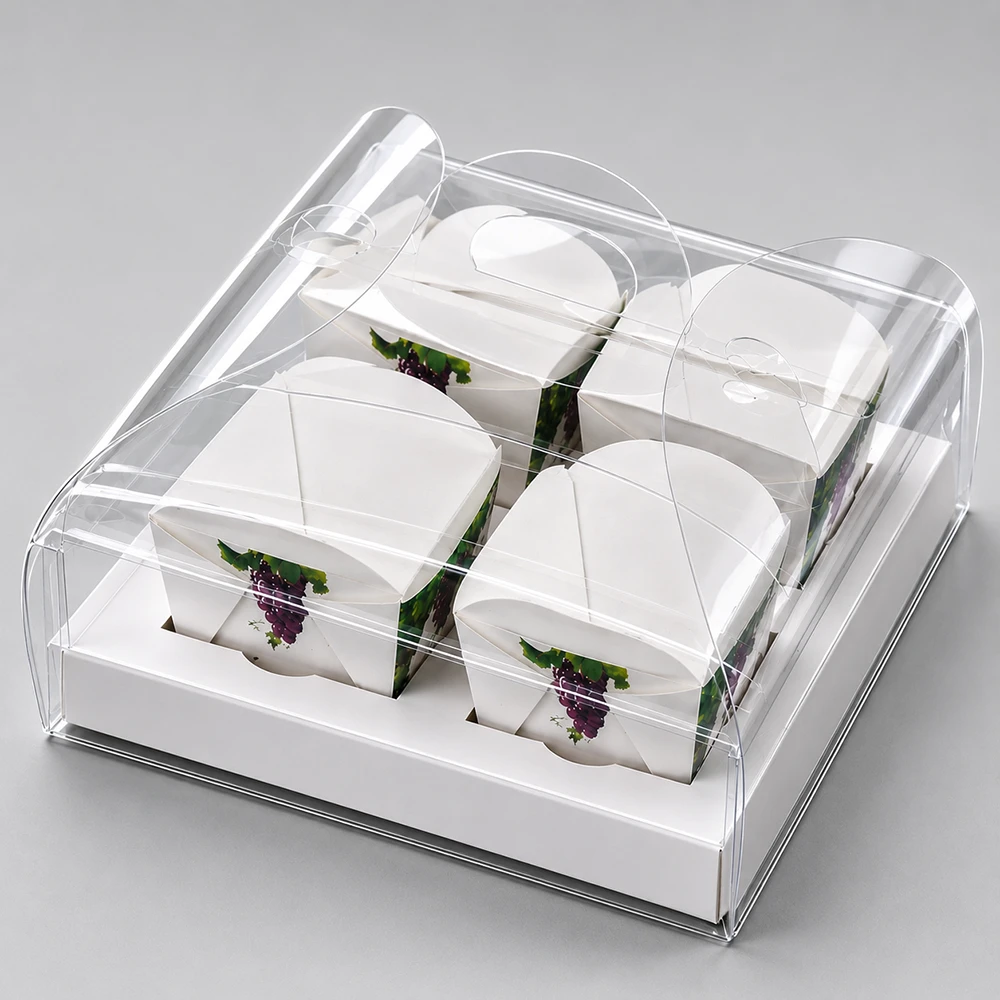
Choosing packaging for a food product involves more than selecting a box, bag or label that looks right. The packaging has to suit the food, the way it will be packed and stored, and the market where the product will be sold.
A material that works for one food application may not be suitable for another. Temperature, contact time, moisture, oil content and the intended use can all affect the requirements. Buyers should define these conditions before asking suppliers to recommend a packaging format.
Start with the food product and its intended use
Describe the food as clearly as possible. Is it dry, oily, acidic, frozen, chilled or ready to eat? Will it be sold as a single item, a multipack or part of a gift set?
These details help establish what the packaging needs to do. A carton used as an outer sleeve may have a different role from a pouch or container that directly holds the food.
Also consider the product’s expected shelf life and storage conditions. Packaging for a product kept at room temperature may face different requirements from packaging used in chilled or frozen distribution.
Avoid using broad descriptions such as “food packaging” as the complete brief. The more clearly the product and use are described, the easier it is to identify the relevant material and performance questions.
Confirm whether the packaging is in direct food contact
One of the most important distinctions is whether a packaging component touches the food directly.
A printed paperboard carton around a sealed inner pouch may not have the same function as a paper wrapper that directly contacts the product. A window, coating, adhesive, ink or other component may also need to be considered depending on its position and the possibility of contact or transfer.
Map the full packaging arrangement. Identify the primary food-contact layer, secondary packaging and outer transport packaging. If the package contains several materials or components, list them rather than describing the whole item with one material name.
This information is important when checking which food-contact rules and supporting evidence apply.
Define temperature, time and storage conditions
Food-contact suitability is linked to the conditions in which a material is used. Buyers should explain whether the package will be used for hot filling, refrigerated storage, freezing, reheating or other specific conditions.
The expected contact time also matters. A material intended for brief contact may not be suitable for a different use involving longer storage or a different temperature.
Provide the supplier with the actual use conditions rather than asking only whether a material is “food safe.” The responsible compliance team should assess the material against the relevant requirements for the intended application and destination market.
Choose a packaging format that fits the product
The format should support the product’s handling, storage, display and distribution needs. Depending on the application, buyers may be considering folding cartons, paper bags, sleeves, labels, wraps, pouches or a combination of components.
For paperboard packaging, consider whether the carton is an outer pack, a divider or a direct-contact component. If the product is sold in a container, the carton may need to hold the container securely and provide space for product information.
For bags and wraps, consider how the product is inserted, carried, sealed or presented. If the food is oily or moist, the intended contact surface and any required barrier properties need to be assessed rather than assumed from the appearance of the paper.
Consider moisture, grease and other barrier needs
Some food products create specific packaging challenges. Moisture, oil, aroma, oxygen and light may affect product quality or the suitability of a packaging arrangement.
Not every package needs every type of barrier. The relevant requirement depends on the food, its shelf life, storage conditions and the packaging system.
If a barrier coating, film or laminate is being considered, ask what function it is intended to provide and whether it is suitable for the intended food-contact use. Also consider how additional layers may affect recyclability and the packaging’s end-of-life treatment in the destination market.
Do not treat a material’s visual appearance or general description as proof of barrier performance. Request the appropriate technical information and review it with the responsible product or compliance team.
Check printing, inks, adhesives and finishes
Food packaging may include printed graphics, labels, adhesives, coatings and decorative finishes. Their position and intended use can matter, particularly where direct or indirect contact is possible.
Tell the supplier whether printing is on the outside or inside, whether the package has a window, and whether any label or adhesive is close to the food-contact area. If the design includes special finishes or multiple material layers, include them in the packaging specification.
Artwork approval should also include the required product information and any mandatory wording. The brand owner or responsible compliance contact should confirm the accuracy and legal suitability of that information for each market and language.
Confirm the destination market and supporting documentation
Food-contact rules are not identical in every market. A package intended for sale in the EU may need to be assessed against different requirements from one intended for another country.
Before production, identify the countries where the product will be placed on the market and who is responsible for confirming compliance. Ask which declarations, test reports, material specifications or other records are required for the particular application.
A supplier may be able to provide material information or documents from upstream manufacturers. However, a general statement from a supplier does not automatically establish that the complete finished packaging complies with every rule in every market.
For EU-bound food-contact packaging, buyers should also be aware that the PPWR introduces restrictions on PFAS in food-contact packaging from 12 August 2026. The applicable provisions and thresholds should be checked against Regulation (EU) 2025/40 and current official guidance. This is one reason to make the intended use and destination market clear from the beginning.
Review a sample and the complete packaging arrangement
A sample can help assess dimensions, structure, opening, sealing, appearance and handling. It should be reviewed with the actual product or a representative sample wherever practical.
Check that the package is easy to fill, close, store and display. If the packaging includes an inner bag, liner, tray or label, assess the complete arrangement rather than reviewing each component in isolation.
A visual sample review does not replace food-contact compliance assessment or technical testing. Those checks should be determined by the product, material, use conditions and applicable rules.
Prepare a clear brief before requesting a quotation
A useful food-packaging brief should include:
- The type and characteristics of the food
- Whether each packaging component has direct food contact
- Expected contact time and temperature
- Storage and distribution conditions
- Required packaging format and dimensions
- Any moisture, grease, aroma or other barrier needs
- Destination markets and languages
- Artwork status and required product information
- Expected order quantity and delivery requirements
If some details are not yet known, mark them as undecided. It is better to identify an open compliance question than to let a supplier make an assumption.
Make food-contact requirements part of the first discussion
Food packaging should be specified around the product and its actual conditions of use. Confirm contact status, temperature, time, storage, destination market and the role of every packaging component before finalising the material and artwork.
If you are sourcing packaging for a food product, share the food type, intended contact conditions, packaging format and destination market with FYpackaging. This helps define the information that should be reviewed before the specification is finalised.